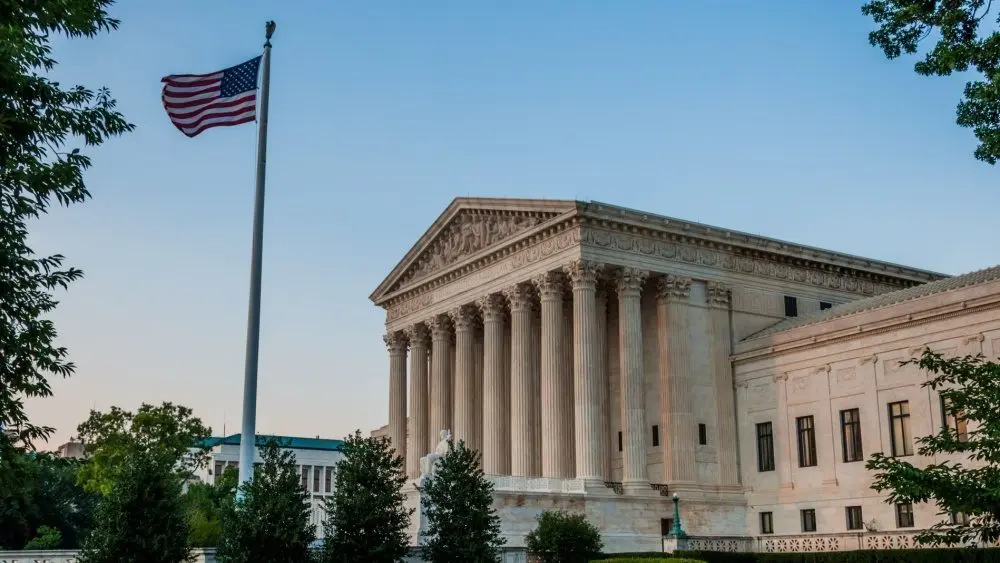
The U.S. Supreme Court delivered a unanimous decision siding with Cox Communications, ruling that internet service providers are not legally responsible for copyright violations committed by their users.
The case stemmed from a long-running dispute between Cox and a coalition of record labels led by Sony Music Entertainment. The music industry had argued that Cox failed to act on repeated piracy warnings and should have disconnected repeat offenders. A jury previously awarded over $1 billion in damages, but that decision was later overturned on appeal.
At the heart of the dispute was whether ISPs must police user behavior. The labels claimed Cox ignored its own enforcement system and prioritized profits, arguing, “Cox made a deliberate and egregious decision to elevate its own profits over compliance with the law.” They pointed to the company’s limited enforcement despite widespread infringement tied to peer-to-peer platforms like BitTorrent.
Cox countered that holding providers responsible would force them to cut off internet access based on unverified accusations, potentially affecting entire households, businesses, hospitals, and schools. “That notion turns Internet providers into Internet police and jeopardizes Internet access for millions of users,” the company argued.
The court ultimately agreed, rejecting the idea that service providers can be held liable without clear intent to support infringement. The ruling also wipes out a massive damages award—reported as high as $1.5 billion—marking a significant setback for the entertainment industry’s efforts to combat online piracy through ISPs.
Writing for the court, Clarence Thomas emphasized that simply offering internet access—even with awareness that some customers may misuse it—does not make a provider liable. “Under our precedents, a company is not liable as a copyright infringer for merely providing a service to the general public with knowledge that it will be used by some to infringe copyrights,” he wrote. He added that Cox neither encouraged illegal activity nor designed its service to enable it.
In a concurring opinion, Sonia Sotomayor, joined by Ketanji Brown Jackson, said the court’s reasoning was too narrow and suggested other legal theories might still apply in future cases. “Plaintiffs cannot prove that Cox had the requisite intent to aid copyright infringement for Cox to be liable on a common-law aiding-and-abetting theory,” Sotomayor wrote.
The decision drew support from groups including the American Civil Liberties Union and major tech companies like Google and X, which warned that holding ISPs liable could disrupt internet access nationwide.
Editorial credit: Walt Bilous / Shutterstock.com